China terms Hasina verdict an internal issue
China calls Sheikh Hasina verdict Bangladesh’s sovereign decision, avoids political comment
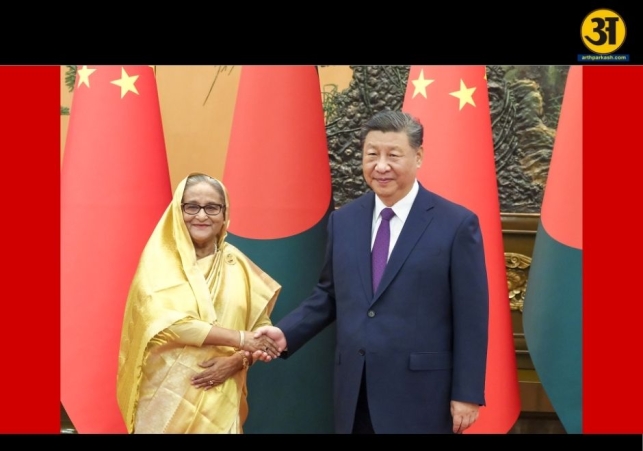
China has responded carefully to the recent political developments in Bangladesh after former prime minister Sheikh Hasina was sentenced to death in absentia. Beijing has called the issue an internal matter of Bangladesh and avoided making any direct remarks on the ruling. The verdict, issued by Bangladesh’s International Crimes Tribunal, has created strong reactions across the region, especially as Dhaka has also asked India to extradite Hasina, who has been living there since last year.
China’s foreign ministry said it hopes Bangladesh will achieve unity and stability, but it has no intention of interfering in the country’s domestic affairs. The developments come at a time when Bangladesh is witnessing a tense political atmosphere following last year's student-led protests and the change in government.
China’s response to the verdict
On Tuesday, Chinese Foreign Ministry spokesperson Mao Ning addressed questions from the media in Beijing about the death sentence handed to Sheikh Hasina. Mao said China views the matter strictly as Bangladesh’s internal affair, adding that Beijing would not comment on the decision made by the tribunal.
Mao said China maintains a policy of peace, cooperation, and “good neighbourliness” towards Bangladesh. She reiterated that China values its relationship with the Bangladeshi people and wants to see the country progress. “We sincerely hope that Bangladesh will achieve solidarity, stability and development,” she said.
Sheikh Hasina, 78, was sentenced to death for crimes against humanity linked to her government's handling of last year’s widespread anti-government demonstrations led by students. Her administration was accused of using violent methods to curb public protests, which had expanded across major cities and received international attention. Former home minister Asaduzzaman Khan Kamal also received a death sentence on similar charges.
The tribunal found them responsible for issuing orders that led to mass deaths, disappearances, and other severe human rights violations. Both leaders were tried in absentia because they were not present in Bangladesh during the trial.
Hasina has been staying in India since August 5 of the previous year, when she fled Bangladesh amid the massive protests that eventually resulted in the collapse of her government. She was later declared a fugitive by the court.
Background of the student protests
The student protests referenced in the tribunal’s judgment originated from demands for government reforms, accountability, and justice for years of alleged corruption and abuse of power. The demonstrations grew rapidly, drawing thousands of young people across the country.
Authorities were accused of taking a harsh approach, including firing on protesters, mass arrests, and shutting down campuses. The government denied wrongdoing, but pressure continued to grow until Hasina left the country.
The tribunal’s recent judgment marks one of the most severe punishments issued in connection with the events.
ALSO READ: New strategies aim to reshape global tech growth and future manufacturing
ALSO READ: Kejriwal’s swift ascent contrasts with Kishor’s early setback in debut political battles
Bangladesh asks India to extradite Hasina
Following the ruling, Bangladesh has formally urged India to extradite both Sheikh Hasina and former home minister Asaduzzaman Khan Kamal. This request came only hours after the special tribunal announced its verdict.
In a statement carried by the state-run BSS news agency, Bangladesh’s Foreign Ministry said:
“We urge the Indian government to immediately hand over these two convicted individuals to the Bangladeshi authorities.”
The ministry claimed that the bilateral extradition agreement between India and Bangladesh requires New Delhi to return individuals who have been convicted in each other’s courts. It also stated that offering shelter to those found guilty of crimes against humanity would be considered an “unfriendly act” and a violation of principles of justice.
India, however, has not yet commented publicly on whether it plans to send Hasina back. It previously acknowledged receiving a diplomatic note from Bangladesh in December last year, where Dhaka had requested her extradition. At the time, India only confirmed receipt of the message and did not express any intention to act on it.
Hasina’s status in India
Sheikh Hasina has been living in India since escaping Bangladesh during the peak of the protests. Reports indicate that she has remained under protection, although the nature of her stay has not been officially disclosed by the Indian government.
Bangladesh’s tribunal has labelled her a fugitive, and the government claims India is now obligated to send her back. However, political observers point out that extradition decisions often involve diplomatic, legal, and humanitarian considerations. India is expected to weigh all aspects before announcing any move.
In the case of Asaduzzaman Khan Kamal, Bangladesh claims he is also in India, though Indian authorities have not confirmed this. Kamal faces the same charges as Hasina and was sentenced alongside her in the tribunal’s verdict.
What happens next?
The situation places India in a delicate diplomatic position. Bangladesh is one of its closest neighbours, and both countries share strong political, economic, and security ties. At the same time, the extradition of a former prime minister—especially one accused of political crimes—may involve sensitive international law issues.
China’s neutral and cautious reaction also highlights how other countries may choose to approach the situation. By calling the matter an “internal affair,” Beijing has made it clear that it does not intend to influence the unfolding developments.
As of now, the verdict, the extradition request, and the ongoing political tension in Bangladesh remain topics of regional concern. With both leaders tried in absentia and sentenced to death, the coming weeks may see significant diplomatic discussions between Dhaka and New Delhi.
Related News